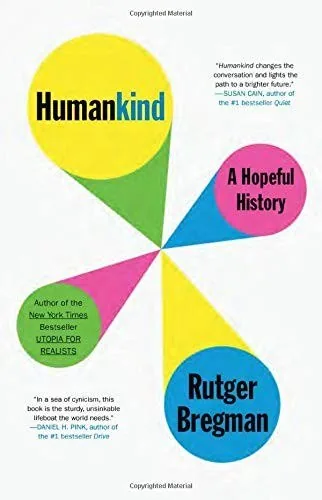
Cover via Open Library
Matt's pick · not sponsored
Humankind: A Hopeful History
- human nature
- optimism
- history
- psychology
- kindness
As an Amazon Associate I earn from qualifying purchases. Full disclosure
Why I'd hand it to you
Rutger Bregman argues that most people are basically decent, and that our cynical view of human nature is often wrong. He revisits famous studies and stories that seemed to show the opposite, like the Stanford Prison Experiment, and shows how some of them fall apart. He also tells the true story of shipwrecked boys who cooperated rather than turning on each other. It is encouraging and readable. Where it falls short: Bregman sometimes oversells his case and picks examples that fit, which critics have pointed out. Read it as a hopeful argument rather than the final verdict, and it is a good counterweight to cynicism.
— Matt Jordan
Quick summary
- Book
- Humankind: A Hopeful History by Rutger Bregman
- Who it's for
- Readers worn down by cynicism who want a hopeful case for human decency, read alongside its critics.
- Key topics
- Human nature and kindness
- Famous studies revisited
- The shipwrecked boys' true story
- Optimism grounded in history
- Shelves
- Science, History, Psychology, Philosophy
Details
- Author
- Rutger Bregman
- ASIN
- 0316418536
- On these shelves
- Science History Psychology Philosophy
- Short link
mattsbooks.org/r/huma